
The ill-health capability meeting: what to say, what to record, and when the decision can be made
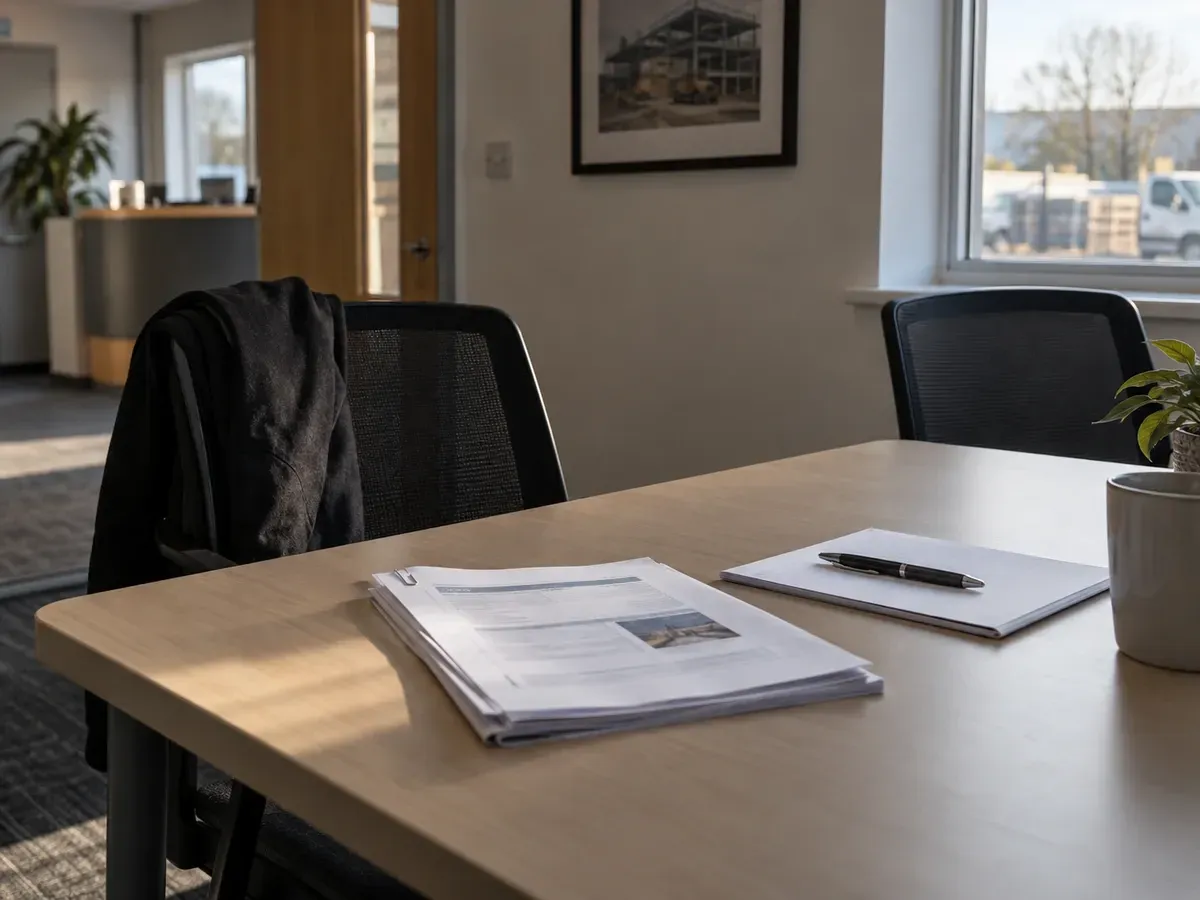
The employee is back in the building for the first time in four months. He has arrived early, brought his wife, and is waiting in the small meeting room by reception with his coat still on. Between him and the contracts manager is the occupational health report. It came nine days ago. The contracts manager has read it twice without deciding what to do with it. The managing director's instruction that morning, given in the corridor, was to have a chat and see where he is.
So the meeting starts, and nobody in the room knows what it is for. The contracts manager wants a date. The employee wants to hear that his job is safe, and has half prepared himself for the opposite. Neither will get what he came for. The meeting was set up as a conversation; the letter inviting him to it ran to two lines, and the one document that could have given the hour a shape stays closed. At the end, four lines go in the file, and a review goes in the diary. The review does not happen.
That meeting is held in small businesses every week, and it fails the same way each time. Someone decides that a person who is unwell should not be put through anything formal. So the meeting is kept soft, and the softness is read afterwards as a process that never started. How the absence should have been handled before this meeting was ever booked is covered elsewhere. This piece picks up inside the room.
A meeting that does not know what it is for
Two kinds of meetings are held with someone on long-term sick leave. The first is the welfare conversation, about how the person is and what would help, and it should have been happening every few weeks since the absence began. The second is the capability meeting, where the medical evidence is on the table, and the future of the employment is the subject. It can end in dismissal only if the employee was told beforehand that it might, and it assumes the business has already settled whether it is dealing with someone who cannot do the job or someone who will not. The meeting in the opening scene borrows the informality of the first and the consequences of the second. An employee who walks in expecting to talk about how he feels, and walks out having learned that his job is under review, has been ambushed. A tribunal will say so before it reads a line of the report.
Which is why the invitation letter matters more than its length suggests. It should say what the meeting is, what will be discussed, that he can bring a companion, and, where it is true, that one possible outcome is the end of his employment. Nobody enjoys writing that sentence. Leaving it out changes nothing about the outcome except whether it can be defended.
That leaves the question the contracts manager should have asked in the corridor: is this a conversation or a decision? Where the medical evidence has just arrived, the answer is usually a third thing: a consultation, and consultation is specific. It means putting the evidence in front of the employee, asking what he makes of it, hearing his own view of his prospects, and weighing that view before anything is decided. A meeting where the manager announces a conclusion is a decision. The one in the middle, where the employer puts questions and writes down the answers, is the only kind that protects anybody present.
Three questions the law expects you to have answered
The legal test is shorter than employers fear. Capability is a potentially fair reason for dismissal under the Employment Rights Act 1996. Where ill health is the cause, the tribunal asks whether the employer acted reasonably, judged against the size and resources of the business. A forty-five-person contractor is not held to the process a hospital trust would run. But it does have to answer three questions, and be able to show how.
The Court of Session set them out in 2013, in a case about a Dundee council employee with thirty-five years' service who had been off for the better part of a year. Tribunals have applied them since. First, does the employer know the medical position from proper medical advice, including the likely prognosis? Second, was the employee consulted, and his own view of his prospects weighed? And third, in all the circumstances, could the employer reasonably have been expected to wait longer? Length of service counts alongside them. None of it requires a detailed medical examination, only that the right questions were asked of the right people and the answers can be shown.
Each of the three has a habit of being assumed. On the first, a file of GP fit notes going back four months is evidence of nothing except that the employee has been signed off. An employer who treats fit notes as a prognosis is building on air. So the occupational health referral is where the medical question gets answered, and its value depends on what the referral asked. A report that says he is unfit for his substantive role at present, review in twelve weeks, has answered the question it was set. Whether that was a useful question is the employer's problem.
On the second, consultation has to be capable of changing the outcome. If the employee says the report understates his progress, that has to be heard and, where reasonable, tested with occupational health or his own consultant. And if he says he could do the job with the van reallocated and the ladder work given to someone else, that has to be weighed on its merits and the answer written down with a reason. Telling him what has already been decided is a notification wearing consultation's clothes.
On the third, employers are entitled to answer in their own commercial terms, and rarely do so out loud. The cost of temporary cover, the load on the rest of the team, the size of the business and whether contractual sick pay has run out are all legitimate considerations, and the courts have said so. But they have to be thought through and recorded at the time. A school that dismissed a teacher after more than a year's absence lost at the Court of Appeal in 2017. She had produced evidence at her internal appeal that she was fit to return, and the school did not stop to test it. The court accepted that a time comes when an employer is entitled to some finality. It still found that this employer could not show what waiting a little longer would have cost. So if there is a sickness absence that has run longer than feels comfortable in your business now, this is the question to write the answer to this week, while the reasons are current.
What to say: the report, the role, and the employee's own account
Open the report in the meeting and work through it with him, whatever the instinct to spare him that. Occupational health needs his agreement before the report reaches the employer, and in most cases he will have seen it first, so there is nothing on the table he does not already know, only how his employer is about to read it against his job.
Take it paragraph by paragraph. Where it describes the condition and the prognosis, ask whether that matches his own understanding and what his treating team have said since. Where it describes what he can and cannot do, put the duties of the role next to it: the driving, the lifting, the working at height, the sites he would go back to. Ask which of those he could manage now, which with changes, and which he cannot see returning to. Then take each adjustment the report recommends. A phased return over six weeks is usually possible. Removing ladder work permanently from a role that is largely ladder work may not be, and that is better said in the room than written in a letter afterwards.
Then ask what he thinks would help, and whether there is anything in the report he disagrees with. Soft as they sound, those questions are the evidence of consultation. They are also where the useful information turns up, because an employee will tell a manager something he never told the occupational health adviser. The adviser did not know to ask about the fortnightly site in Colchester with the loft access.
Two things should not be said. The manager should not offer a medical opinion of his own, however obvious it seems, because a manager's diagnosis in the note is a gift to the other side. And he should not make promises the business has not decided to keep. "There is no rush" and "we will look after you" are kind sentences that become, in a claim, evidence that the employer told the employee his position was secure and then dismissed him.
Where new information arrives, adjourn. A consultant's letter that occupational health has not seen, or a change in treatment, means the meeting has done its job by surfacing it, and the decision waits until the evidence has caught up.
What to record: the note a tribunal reads before it reads anything else
Now to the four lines. The note from the opening scene reads, in full: met with J, discussed OH report, J keen to return, review in one month. It records that a meeting happened, not what was said in it. And a year later, when a solicitor's letter asks for everything on the file, that is the document the business will be defending itself with.
The note is the evidence that consultation happened, and nothing else is. The manager's memory of a decent conversation is worth very little two years on, and the employee's memory will differ from it. So the test for the note is simple. Could someone who was not present reconstruct from it what the employee was told and how he answered? If not, the meeting may as well not have happened.
Nobody needs a transcript. A note that does the job opens with the purpose of the meeting as it was stated at the start, and the employee's acknowledgement of it. Against each point in the report, it sets down what he said, in his own words where the words matter. The adjustments and alternative roles considered go in, with the reason each was rejected. In a business of forty-five, the plain position may be that there are none, and that goes in too. It closes with what was agreed, who is doing it and by when. Where the meeting was a formal one, it also shows that he was told dismissal was a possible outcome and given the chance to respond.
Then it goes to the employee, within a few days, with an invitation to correct anything he thinks is wrong. That step frightens managers, and it should not. A note the employee has seen and not disputed carries a weight that one he first meets eighteen months later, in a tribunal bundle, can never have.
When the decision can be made, and when waiting becomes the unfair part
The decision can be made when the three questions have answers the employer can point to, and not a day before. The medical position is as clear as it is going to get, or occupational health has confirmed that nobody can say. Adjustments and alternative roles have been worked through with him. The ones that will not work have reasons attached. He has been consulted and told, in writing and in the room, that the end of his employment is one possible outcome. And the business has written down why it cannot reasonably wait longer: what the absence is costing in cover and in strain on the people carrying the work, and what has changed since the last review. He does not have to agree. The prognosis does not have to be hopeless, provided the uncertainty was tested and not assumed. And a complete process can be a short one, because length is not what a tribunal is measuring.
Smaller businesses often assume the Acas Code of Practice governs all of this, and that a procedural slip brings an uplift of up to twenty-five per cent. It does not. The Employment Appeal Tribunal held in 2016 that the Code does not apply to a genuine ill-health dismissal, because there is no misconduct to correct. So the uplift is not available. Some employers hear that as good news. But it is closer to the opposite, because there is no code to lean on either. The fairness of the process is judged on the record alone, and the record is the note.
Waiting becomes the unfair part at a recognisable moment. A review is diaried and not held, then a second one after it, and the employee, hearing nothing for months, reasonably concludes that his position is secure. So the eventual meeting arrives as a shock the earlier ones would have spared him. Each month looks defensible. But together they are the reason a fair decision, taken late, gets judged against a year in which the employer behaved as though no decision was needed.
From 1 January 2027 the same process applies to anyone with six months' service. The qualifying period for an unfair dismissal claim falls from two years to six on that date, and the cap on compensation goes with it. So a business that has never run an ill-health capability meeting for someone with two years' service will be running one for people it hired this summer. The two-line letter and the four-line note have often been survivable because the person on the other side could not yet claim. From January that will be true of far fewer of them.
The meeting you are about to hold
The contracts manager will hold the meeting again, because the absence will not resolve itself and the managing director will eventually ask what the position is. What he does the second time differently costs him an hour of preparation: a letter that says what the meeting is, a copy of the report read against the job description, a list of the questions he needs answered, and a colleague to take the notes. What makes the meeting fair is that everyone in the room knows what it is for, and that the note proves it afterwards.
If you have a capability meeting in the diary and you are not sure whether it is a conversation or a decision, a short message gets a direct read on which it should be and what needs to be on the table before it happens. It comes back from Nick or the team, usually the same day.
Common questions
What is an ill health capability meeting for?
It is the point in a long-term sickness process where the medical evidence, usually an occupational health report, is put to the employee and worked through with him: what the report says about his condition and prognosis, what the role requires, what adjustments or alternative work have been considered, and his own view of his prospects of returning. It is a consultation, and its purpose is to inform a decision the employer has not yet made.
Can an employee be dismissed at an ill health capability meeting?
Only where the employee was told in writing beforehand that dismissal was a possible outcome, the medical position has been established on proper advice, adjustments and alternative roles have been considered, and he has had the chance to respond. Where new medical information emerges in the meeting, the decision should wait until it has been considered. Even then, the decision is usually confirmed in writing after the meeting, with a right of appeal, and not delivered in the room.
What should the notes of a capability meeting include?
The stated purpose of the meeting, what was put to the employee from the medical evidence and what he said in reply, each adjustment and alternative role considered with the reason it was or was not adopted, his own account of his prognosis, what was agreed and by when, and, at a formal stage, that he was told dismissal was possible. The note should go to the employee for comment within a few days. A transcript is unnecessary. The test is whether someone who was not there could reconstruct what was said.


