
When Running the Business Starts Carrying More Risk Than You Realise
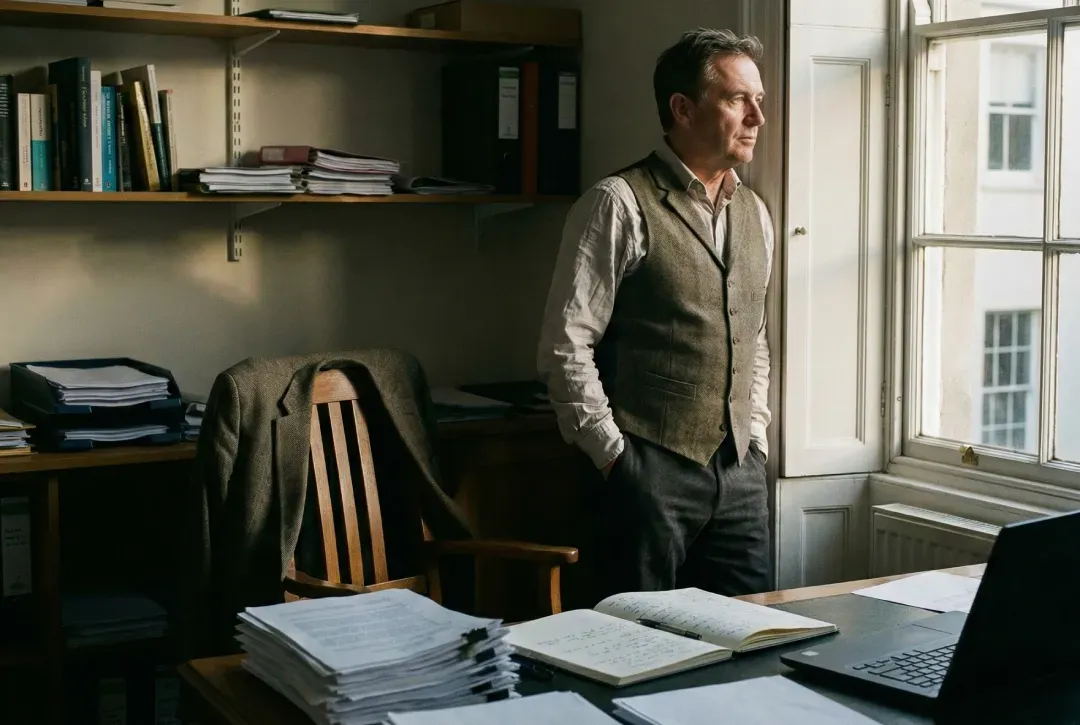
There is a point in most growing businesses where the role of the Managing Director subtly changes.
It does not happen overnight, and there is rarely a single moment that marks the shift. The business is still trading, the team is still turning up, and clients are still being served. On the surface, everything looks fine. But underneath, the nature of decisions begins to change.
Fewer decisions are easily reversible. More carry legal, people, or safety consequences. And more of them sit with one person.
The Managing Director.
This is often when leaders feel busier, more exposed, and oddly less certain, even though they are more experienced than they have ever been. Most do not describe this as a problem. They describe it as “part of the job”.
That assumption is usually where risk begins to build quietly.
How risk accumulates without being noticed
When pressure increases, the instinctive response is to add more structure. More processes, more policies, more suppliers, and more advice. The belief is that additional information will reduce exposure.
In practice, growing businesses rarely struggle because they lack knowledge. They struggle because decisions are made in isolation.
It often starts with small, reasonable choices. A people issue handled informally because it feels proportionate. A safety concern parked for later because today is already full. A contractual grey area glossed over to keep things moving. A difficult conversation postponed because there is no space to deal with it properly.
Each decision makes sense at the time. Over weeks and months, those decisions begin to form patterns.
Those patterns are rarely visible from inside the business. They usually only become obvious when something goes wrong. By then, it is too late to wish they had been handled differently.
Why problems are often misdiagnosed
One of the most persistent myths in growing organisations is that problems fall neatly into categories. This is an HR issue. That is a Health and Safety matter. This one is commercial. That one is cultural.
In reality, serious problems do not respect organisational charts.
A performance issue becomes a grievance. A safety incident triggers a disciplinary process. A rushed dismissal turns into an employment tribunal claim. A well-intentioned workaround becomes evidence of inconsistency.
By the time an issue is clearly labelled, it is often already well advanced. This is why many Managing Directors feel blindsided when consequences appear. The early warning signs were there, but they did not look significant at the time.
When informality stops scaling
In very small businesses, informality works by necessity. Everyone knows the context, exceptions are understood, and judgement fills the gaps. As organisations grow beyond around twenty-five people, that informality becomes harder to sustain.
More managers are involved. More decisions are delegated. More interpretations of what is “reasonable” exist. The Managing Director still carries accountability, but visibility reduces.
This is often the point where leaders are surprised to discover that what felt like sensible delegation has actually increased their personal exposure.
UK employment tribunals do not assess intention. They assess process, consistency, and fairness. Health and Safety investigations do not focus on effort. They focus on systems, oversight, and control.
At this stage, leadership is no longer just about making good calls. It is about ensuring those calls stand up when examined later.
This is the point at which many organisations benefit from external decision support across HR, people, and compliance, rather than treating each issue in isolation. This is also where thoughtful HR consultancy support plays a crucial role, not as an administrator, but as a safeguard against avoidable exposure.
Why generic support often falls short
When pressure increases, many businesses turn to large, well-known providers. The logic is understandable. They feel established, safe, and comprehensive.
However, scale cuts both ways.
Large providers are often designed for volume rather than nuance. Their models rely on standardisation, portals, and reactive support. For complex, fast-moving businesses, that can feel disconnected from reality.
As one Managing Director we worked with described it after using a large external provider, the support felt impersonal and detached from the context of their business. The policies existed, but there was little continuity or judgement applied to real situations.
This is not a criticism of competence. It is a mismatch of approach.
Growing businesses do not need more generic answers. They need context, judgement, and continuity.
What Managing Directors actually need at this stage
At this point, the challenge is rarely knowledge. Most Managing Directors broadly understand employment law, Health and Safety obligations, and their responsibilities.
What they lack is space and perspective.
Decisions are made quickly, often between meetings and under competing pressures. There is rarely time to pause and ask the harder questions. Is this consistent with how we handled a similar situation before? Would I be comfortable explaining this decision in six months’ time? What precedent does this set?
This is where decision support becomes valuable. Not advice in the abstract, and not policies dropped into folders, but experienced challenge at the right moment.
Used properly, this kind of support does not slow the business down. It reduces avoidable exposure by addressing the cause of problems rather than just the symptoms.
This is especially important where HR, Health and Safety, and people decisions intersect. These are rarely technical problems. They are judgment calls with legal weight.
Why compliance alone is not protection
Many organisations assume that compliance equals safety. It does not.
Compliance is static. Risk is dynamic.
A business can be compliant on paper and still exposed in practice if decisions are applied inconsistently or without support. Employment tribunal cases are full of examples where policies existed but were used unevenly, or documentation was created after the event rather than at the time.
The common thread in these cases is rarely incompetence. It is isolation.
A final thought for Managing Directors
Running a business will always involve risk. The question is not how to remove it entirely, but how to stop it accumulating quietly.
At a certain size, leadership becomes less about doing more and more about deciding better.
If this article has surfaced questions rather than answers, that is intentional. Those questions are often the earliest signal that additional support would help, while there is still room to manoeuvre. If you would like to explore that quietly, ProgressA’s contact page is there when you need it.


